What if “waste” wasn’t the end point? Purman® remakes PU/PIR offcuts and end-of-life (EoL) panels into reliable cleanroom-grade cores with low-energy processing and a plant-derived lignin binder, now running in KleanLabs® production.
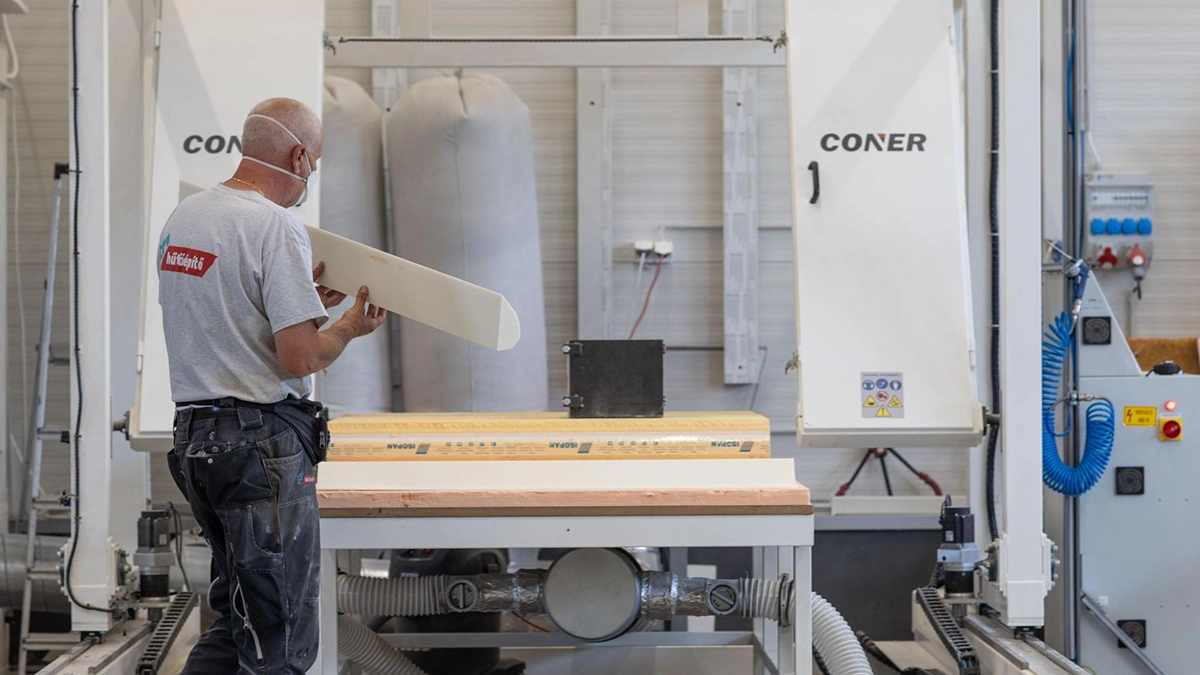
We’re proud that this collaboration was featured in Cleanroom Technology (September 2025). The magazine, one of the key international titles for cleanroom and controlled-environment professionals, presented the KleanLabs®–Purman® solution as a practical route to keep PU/PIR foams circulating in high-performance use instead of sending them straight to disposal.
In the article, it was shown that the recycled cores supplied by Purman® for KleanLabs® doors can meet demanding requirements for insulation and mechanical performance. The cores are recycled, but they are not a downgraded filler – they are specified for projects where cleanroom compliance and stable, predictable behaviour are critical.
“The collaboration between KleanLabs® and Purman® shows that circular-economy principles are not confined to low-spec goods.”
For Purman® , this project is about keeping PU/PIR in a high-value loop. Our recycled-core solution is designed to fit into existing qualification, testing and certification frameworks, while reducing scrap and embodied impact compared to fully virgin cores.

Circular Cores, Lower Embodied Impact
Replace virgin foam with recycled PU/PIR cores without changing your build flow. Purman’s sheets bond and machine like conventional cores, while reducing scrap and embodied emissions and supporting BREEAM/LEED goals.
Why we built this
Rigid PU/PIR foams are designed to last: they insulate well, are mechanically stable, and don’t degrade easily. The downside is that most panels have traditionally ended up in incineration or landfill once dismantled, because the foam is locked between skins and difficult to separate.
Purman® was created to change that trajectory. Our goal is to keep PU/PIR foams in high-performance use, instead of downcycling them into low-grade fillers or disposing of them as waste.
How the Purman® method works
- Feedstock: We use PU/PIR foam from production scrap, construction offcuts, and end-of-life panels, turning a disposal stream into a consistent input.
- Preparation: The foam is cleaned and milled into uniform particles to ensure predictable mixing and final properties.
- Binder: A lignin-based binder replaces most synthetic resins, increasing bio-based content and simplifying the chemistry profile.
- Processing: The blend is formed without process heating, which materially lowers energy demand and reduces associated emissions.
- Forming: Controlled pressing produces new blocks/cores with stable density and mechanical behavior, suitable for cleanroom doors and other precision applications.
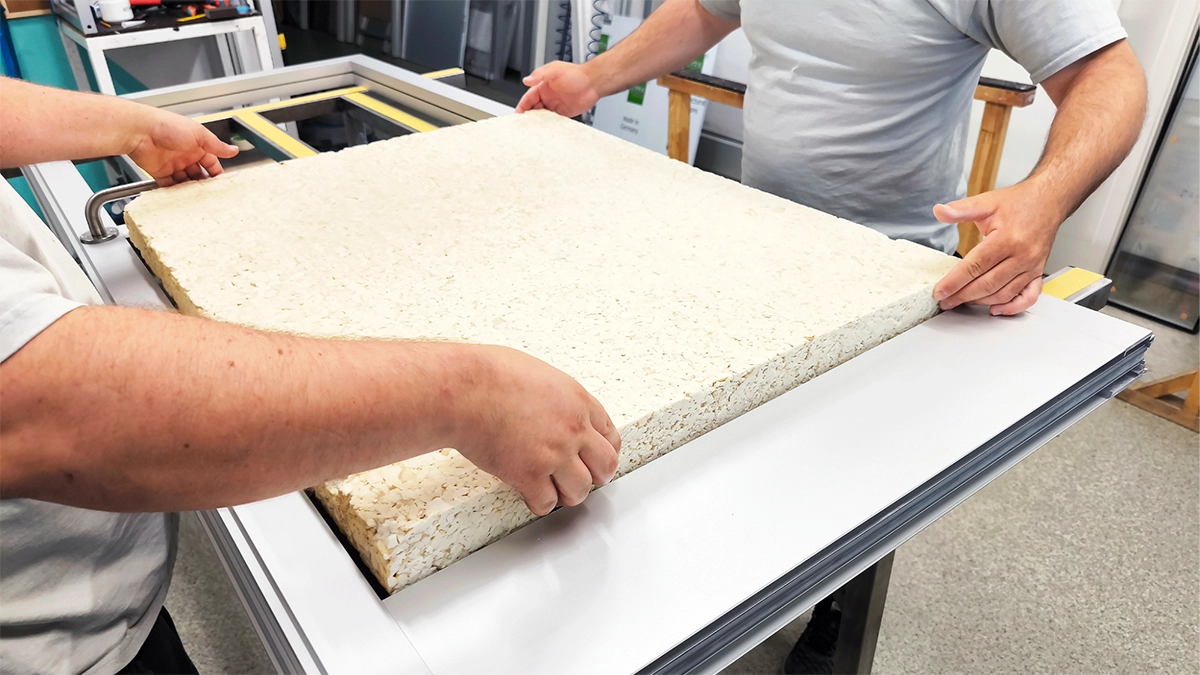
Performance ready for specification
Recycled PU/PIR foams produced with the Purman® method deliver thermal insulation and mechanical stability comparable to conventional rigid foams. Typical thermal conductivity of recycled rigid PU/PIR from our process falls in the range of approx. 0.028–0.034 W/(m·K), supporting energy-efficient, temperature-controlled environments.
Lignin also contributes to strength and fire behavior: the recycled foams can achieve fire classifications such as B and C, making them suitable for building-related and interior applications where fire safety is critical.
Why this helps procurement and sustainability
- Circular supply
Instead of turning high-quality foams into low-grade fillers, we return them to the same class of product, doors and related cleanroom components. - Lower footprint
Using recycled cores supports decarbonization and responsible procurement targets. - Supply resilience
A recycled input stream reduces exposure to virgin polymer price swings and availability shocks.
Cleanroom door manufacturing with KleanLabs®
In collaboration with KleanLabs®, our recycled cores are integrated into cleanroom doors and systems where predictable mechanical and thermal performance is non-negotiable. KleanLabs® designs and manufactures doors for ISO 14644-compliant environments, and our cores are one option they can specify where projects aim to combine compliance with lower embodied impact.
The joint solution supports:
- consistent door panel performance for temperature control and cleanliness,
- compatibility with validated manufacturing and testing processes,
- alignment with certification targets such as BREEAM and LEED, where material sourcing and lifecycle impacts are evaluated.
What changes for facilities
As cold rooms, labs, and production areas are rebuilt, expanded, or modernized, panels that previously would have gone to disposal can now be collected and routed into recycling. This turns renovation and decommissioning projects into a controlled input stream for new cleanroom-ready cores, instead of a pure waste cost.
With Purman® providing the material technology and KleanLabs® integrating recycled cores into door systems, owners and operators can:
- keep more material circulating in high-value applications instead of downcycling it into low-grade uses
reduce the embodied carbon of new cleanroom installations and support internal sustainability and procurement targets - maintain the reliability and performance they expect from established cleanroom suppliers, while gradually shifting towards a more circular material base
Overall, this leads to cleanroom doors and related components that deliver the required performance while relying on less virgin material and less energy across their lifecycle.
Author