The growing volume of end-of-life (EoL) PUR foam material is placing increasing pressure on manufacturers, contractors, and recyclers across Europe.
With stricter environmental regulations and the shift toward a circular economy, the need for responsible, cost-effective management of rigid polyurethane (PU) foam waste is more urgent than ever.
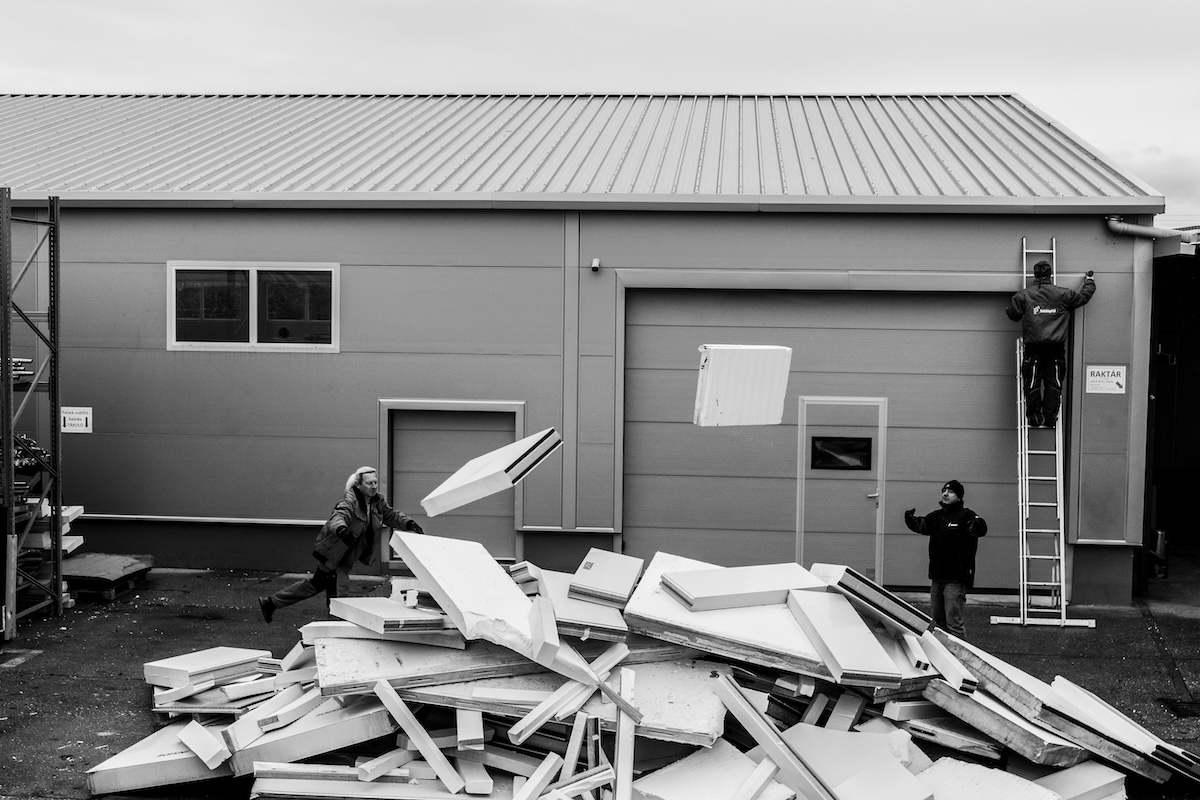
Innovative polyurethane recycling technologies are emerging to meet these demands offering scalable, sustainable alternatives to landfilling and incineration.
This article outlines the:
- current regulatory landscape,
- key challenges, and
- industry best practices for EoL PUR foam material management,
- with a spotlight on innovative mechanical recycling solutions like the Purman® method.
The end of life PUR foam waste problem: a growing challenge
Rigid PUR foam is widely used in construction and refrigeration for its superior insulation properties. But as buildings and appliances from past decades reach the end of their service life, waste volumes are surging.
Key figures:
- Global rigid PU foam end of life waste is projected to exceed 1 million tonnes annually by the early 2030s.
- In the EU, a 25–30% increase in PU foam waste is expected by 2035.
- Main waste sources include:
- Construction: Insulation panels removed during demolition or renovation.
- Refrigeration: Old fridges, freezers, and cold storage units.
Foam waste from buildings constructed in the 1970s–1990s is now reaching disposal, overwhelming current waste management systems.
Why PUR foam waste is difficult to recycle
Rigid PUR foam poses unique recycling challenges:
- Thermoset, cross-linked structure: Cannot be remelted; recycling requires mechanical size reduction and/or chemical routes.
- Contaminants: Depending on origin and previous use, foam may contain surface layers or residues that require additional preparation before recycling
- Low density: Foam is bulky and lightweight, making transportation inefficient and costly.
- Limited end markets: Traditional recycling often results in lower-quality materials with few applications.
Combined, these factors explain why rigid PUR foam remains one of the most difficult plastic materials to recycle effectively.
Key EU regulations shaping foam waste management
To reduce environmental impact and promote material recovery, the EU has introduced strong regulatory frameworks that are reshaping polyurethane foam waste management, particularly around how end-of-life PU foam must be handled.
Extended Producer Responsibility (EPR)
Mandated by EU Directives 2008/98/EC and 2018/851, EPR shifts the financial and operational burden of waste management to producers.
Key EPR requirements:
- At least 70% of construction and demolition waste must be reused, recycled, or recovered.
- Producers are responsible for the collection, transport, and treatment of EoL waste.
- Products must be designed for recyclability, reusability, and durability.
Construction Products Regulation (CPR) – EU No 305/2011
CPR sets performance and sustainability standards for construction materials in the EU.
Key CPR implications:
- Construction works must be designed for the reuse and recyclability of materials post-demolition.
- Encourages use of secondary raw materials and low-impact processes.
Together, these regulations are reshaping the market, making traditional disposal routes less viable and increasing demand for compliant recycling solutions.
Best practices for end-of-life PUR foam management
In response to regulatory, environmental, and economic pressures, industry leaders are adopting best practices focused on sustainable, cost-effective foam waste management.
1. Decentralized recycling
Transporting bulky, low-density foam waste to centralized facilities is cost-prohibitive. A decentralized approach, with on-site or regional processing, reduces logistics costs and improves scalability.

2. Mechanical recycling over incineration or landfilling
Unlike incineration or landfill, mechanical recycling can recover material value without harmful emissions or long-term waste impacts. When done effectively, it aligns directly with EPR and CPR standards.
3. Prioritize high-value reuse
Modern recycling technologies should aim to produce durable, high-performance materials, not just filler. Outputs must meet the quality demands of industries like construction and furniture.
4. Design for circularity
Forward-thinking manufacturers are now designing products that simplify disassembly and material recovery essential for compliance and long-term sustainability.
The Purman® Method: A Practical, Compliant Recycling Solution
The Purman® method is an innovative mechanical recycling process engineered specifically to meet the challenges of end-of-life rigid PU foam while aligning with EU regulatory frameworks and industry best practices.
Key features of the Purman® Method
- Natural binder system: Uses renewable lignin with a reduced petrochemical binder that reacts with lignin
- No external heating required: Reduces energy usage and carbon footprint.
- Decentralized processing: Compact systems enable on-site or local recycling.
- High-performance output: Recycled material is suitable for structural panels, furniture cores, and insulation products.
Why it works
- Regulatory compliance: Supports EPR and CPR goals by diverting foam from landfill and turning waste into usable materials.
- Cost-effectiveness: Lower capital investment than chemical recycling; no need for complex thermal infrastructure.
- Scalability: The process can be implemented by manufacturers, contractors, and waste processors alike.
By turning low-value waste into high-demand recycled materials, the Purman® method transforms end of life PU foam material management from a burden into a business opportunity.
Conclusion: strategic management for a circular future
Managing end-of-life PUR foam material is no longer just an operational challenge—it’s a strategic priority. With regulatory pressure mounting and landfill/incineration routes closing, companies must adopt compliant, circular, and value-driven solutions.
By aligning with EU legislation, applying industry best practices, and adopting scalable mechanical recycling technologies like the Purman® method, organizations can achieve both environmental compliance and economic value turning waste into a sustainable asset.
Ready to improve your EoL PUR foam strategy? Explore how the Purman® method can help your team recycle smarter.
Author